
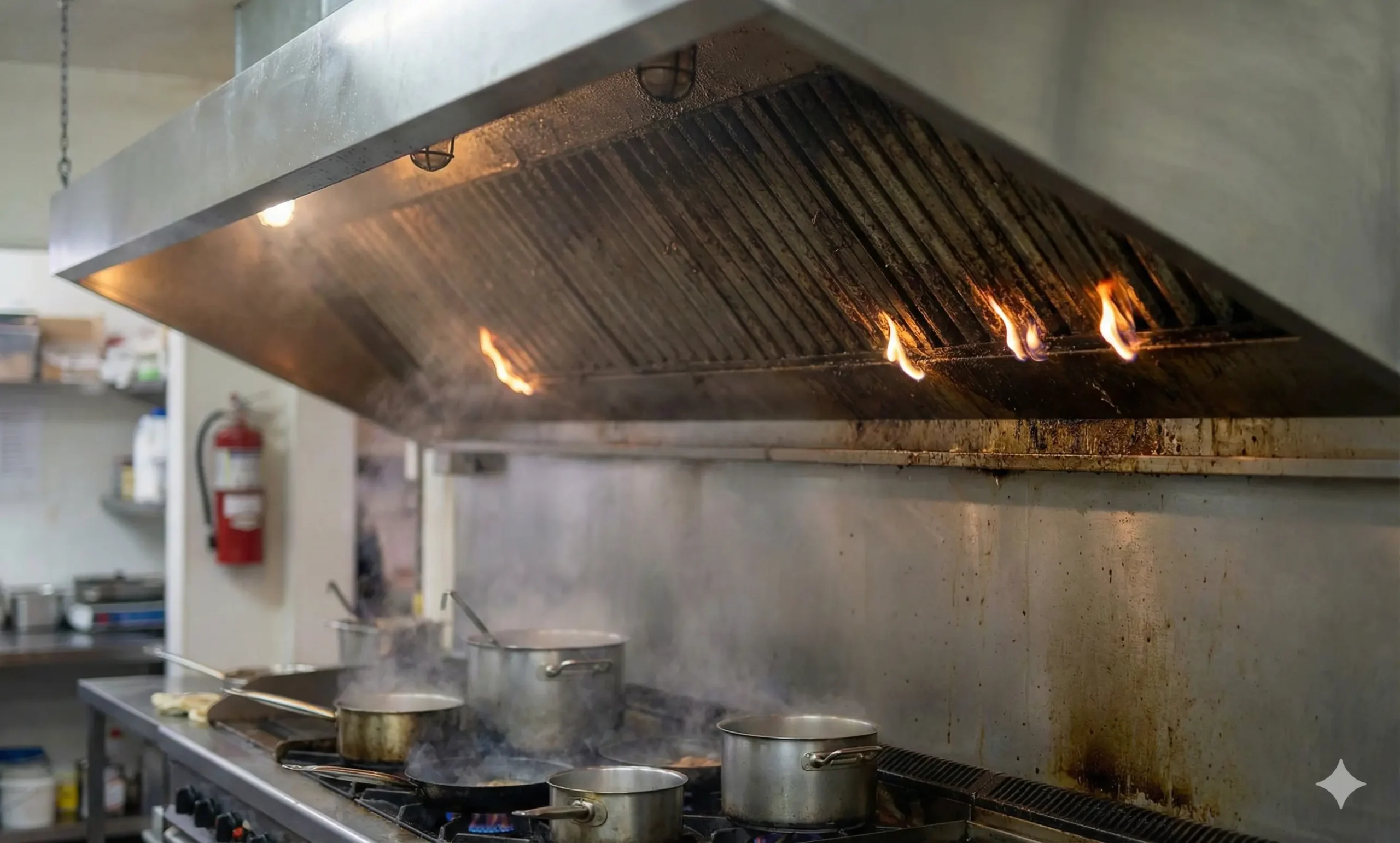
In busy commercial kitchens, grease builds up faster than most restaurant owners realize. While daily cooking makes your hood, filters, and ducts work overtime, neglecting proper cleaning can turn a simple exhaust system into a dangerous fire trap. Here’s how dirty kitchen hoods create fire hazards—and why ignoring them can cost far more than a cleaning service.
1. Grease Buildup Becomes Fuel for Fire
Every time you cook, microscopic grease particles get pulled into the hood system.
Over days and weeks, they turn into thick, sticky layers inside:
-
Hood canopy
-
Filters
-
Ductwork
-
Exhaust fans
This grease is highly flammable. One spark or flare-up from the stove can travel straight into the hood, spreading fire through the ducts in seconds.
2. Blocked Airflow Overheats the System
A dirty hood system doesn’t ventilate properly.
Poor airflow causes:
-
Overheated fans
-
Increased kitchen temperatures
-
Smoke accumulation
-
Extra stress on electrical components
When the system overheats, it raises the risk of electrical failure or heat-induced ignition.
3. Fire Spreads Faster Through Greasy Ducts
A clean duct slows down fire spread.
A greasy duct accelerates it.
Once flames reach the exhaust system, the grease acts like fuel, turning a small stovetop flare-up into a full-blown structural fire that travels across floors — even to the roof.
4. Ignoring NFPA 96 Cleaning Standards Leads to Higher Risks
Toronto restaurants are required to follow NFPA 96 fire safety guidelines, which mandate regular hood cleaning.
Skipping cleanings or delaying service can result in:
-
Failed fire inspections
-
Insurance claim denials
-
Costly fines
-
Mandatory closure after a fire
This isn’t just a cleanliness issue—it’s a legal and financial risk.
5. Small Fires Often Go Unnoticed
Not all hood-related fires are dramatic.
Some are:
-
Small flare-ups
-
Mini ignition points inside ducts
-
Sparks near the motor housing
Owners often ignore these because they burn out quickly. But each one damages the system, dries grease, and makes the next fire easier to ignite.
Final Thoughts
Dirty kitchen hoods are one of the top fire hazards in commercial kitchens—yet they’re also one of the easiest risks to prevent. Scheduling regular professional hood cleaning not only protects your restaurant from fires but also ensures compliance, better ventilation, and safer working conditions.
When the safety of your staff, customers, and property is at stake, hood cleaning isn’t optional—it’s essential.