
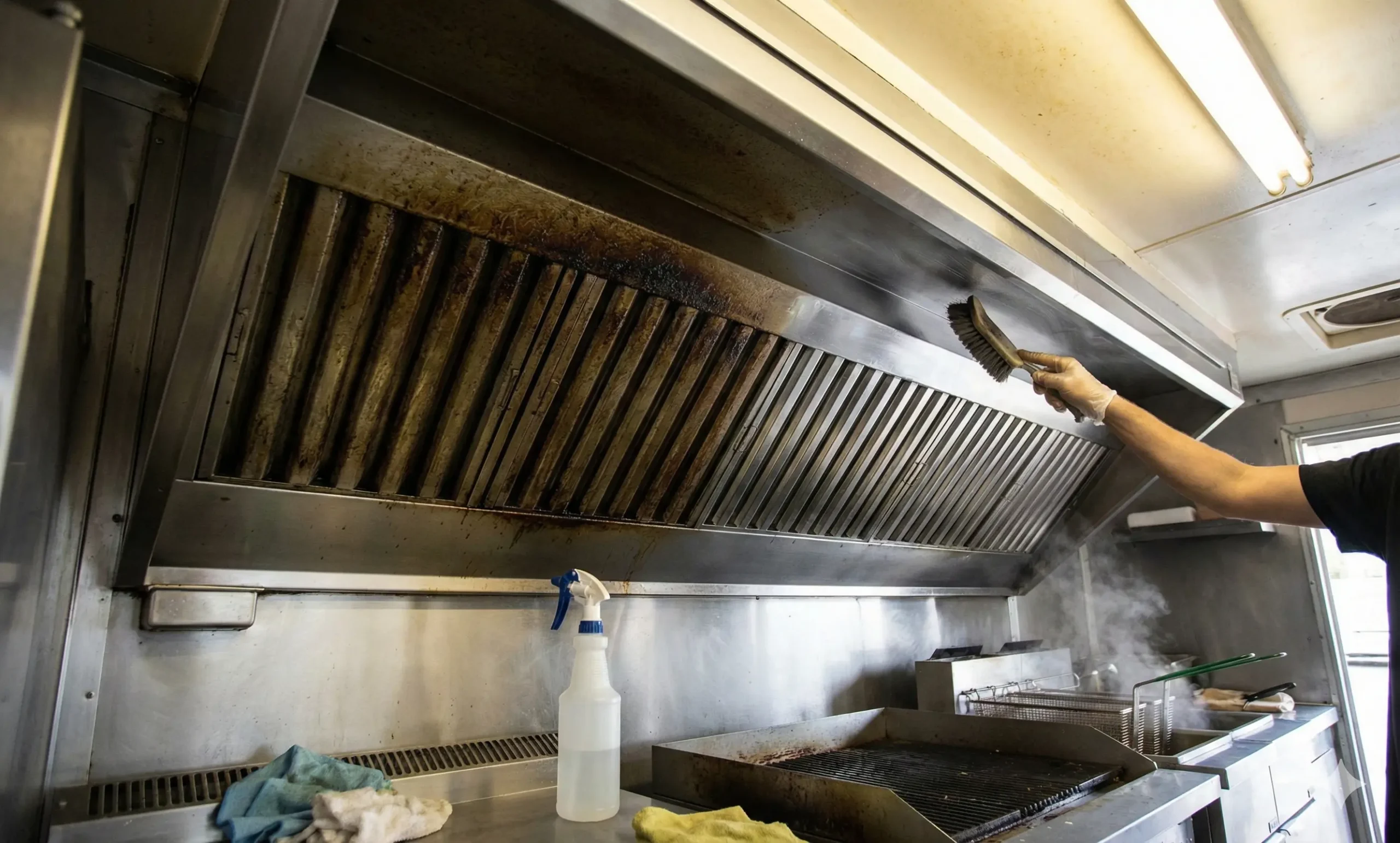
Food trucks run on tight space, high heat, and constant cooking—making hood cleaning even more important than in regular commercial kitchens. In mobile kitchens, grease builds up faster, airflow is limited, and ventilation systems work extra hard. If not cleaned on time, a food truck hood can quickly become a serious fire hazard.
So, how often should food truck owners schedule hood cleaning? Here’s a complete, simple guide.
1. Clean Food Truck Hood Filters Every 1–2 Weeks
Because food trucks usually fry, grill, or sauté continuously, hood filters collect grease at a much faster rate.
You should:
-
Remove and soak filters in hot water + degreaser
-
Scrub away heavy grease
-
Let them dry fully before reinstalling
Weekly cleaning keeps airflow strong and reduces fire risk.
2. Wipe Hood Surfaces Daily
In small kitchens, grease spreads everywhere. Daily wipe-downs help prevent:
-
Sticky buildup on the canopy
-
Strong odors
-
Overheating of exhaust fans
Use non-abrasive, food-safe degreasers for best results.
3. Schedule Professional Hood Cleaning Every 2–3 Months
Food trucks fall under heavy-use kitchens according to NFPA 96 guidelines.
That means you should book professional cleaning:
-
Every 2–3 months for high-volume food trucks
-
Every 3–4 months for moderate use
Pros clean all the hidden areas you can’t reach, including:
-
Ductwork
-
Exhaust fans
-
Grease trays
-
Rooftop fan housing (if installed)
This is essential for fire safety and insurance compliance.
4. Inspect Fans and Ducts Monthly
Because food truck ventilation systems are compact, even a small amount of grease can cause problems. Check for:
-
Slow-moving fan blades
-
Poor airflow
-
Strange smells or noise
-
Heavy grease around the fan base
If anything seems off, get your system inspected immediately.
5. Keep a Cleaning Log for Inspections
Food trucks in Toronto and surrounding areas must maintain proper sanitation records. Your cleaning log should include:
-
Filter cleaning dates
-
Surface cleaning schedule
-
Professional hood cleaning certificates
These records help during health inspections and protect your business legally.
Final Thoughts
Food truck hood cleaning isn’t just a safety requirement—it’s a vital part of keeping your mobile kitchen running efficiently. With limited space and continuous cooking, grease builds up faster than you think. By cleaning filters weekly, wiping surfaces daily, and scheduling professional cleaning every few months, you keep your food truck safe, compliant, and ready for service.