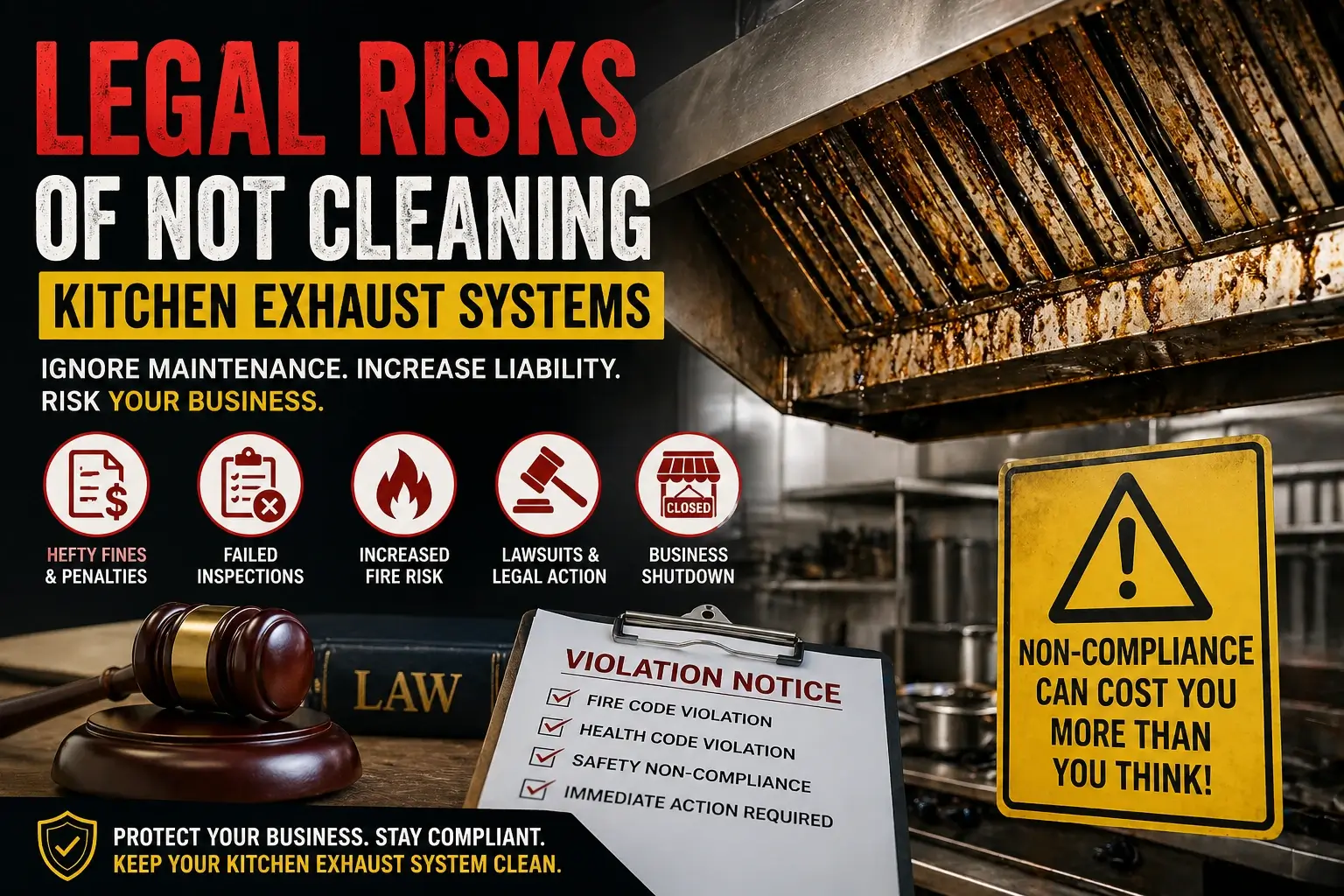
Legal Risks of Not Cleaning Kitchen Exhaust Systems
Many restaurant owners treat kitchen exhaust cleaning as a routine maintenance task—but ignoring it can lead to serious legal consequences. From fines and failed inspections to lawsuits and even business closure, the risks are far bigger than most realize.
If you run a commercial kitchen, understanding these legal risks is essential to protect your business.
1. Violating Fire Safety Regulations
Commercial kitchens must follow strict fire safety standards like NFPA 96, which require regular cleaning of grease buildup in exhaust systems.
Failing to comply can result in:
- Hefty fines
- Immediate shutdown orders
- Increased liability in case of fire
Authorities take grease buildup seriously because it’s one of the leading causes of kitchen fires.
2. Failed Health & Safety Inspections
Health inspectors check kitchen cleanliness, ventilation, and fire safety systems. A dirty exhaust hood can lead to:
- Inspection violations
- Penalty notices
- Temporary or permanent closure
Repeated violations can damage your restaurant’s credibility and reduce customer trust.
3. Increased Liability in Case of Fire
If a fire breaks out due to an unclean exhaust system, you could be held legally responsible.
This can lead to:
- Lawsuits from customers or employees
- Property damage claims
- Criminal negligence charges in severe cases
Without proper cleaning records, it becomes very difficult to defend your case.
4. Insurance Claim Rejection
Most insurance providers require proof of regular maintenance. If your kitchen exhaust system is not properly cleaned:
- Insurance claims may be denied
- You may have to cover damages out of pocket
- Premiums can increase significantly
In short, skipping maintenance can cost you far more than regular cleaning ever would.
5. Lack of Documentation & Compliance Records
Professional hood cleaning services provide detailed reports and compliance certificates. Without these:
- You may fail audits or inspections
- You cannot prove adherence to safety standards
- Legal disputes become harder to fight
Documentation is your first line of defense in any legal situation.
6. Risk of Business Shutdown
In extreme cases, authorities can suspend or revoke your operating license if your kitchen is deemed unsafe.
This means:
- Loss of revenue
- Long-term brand damage
- Difficulty reopening your business
Final Thoughts
Not cleaning your kitchen exhaust system isn’t just a maintenance issue—it’s a serious legal risk. Regular professional cleaning ensures compliance with safety standards, protects your business from liability, and keeps your operations running smoothly.
If you want to avoid fines, legal trouble, and unexpected shutdowns, make exhaust cleaning a non-negotiable part of your restaurant operations.